

Endpoints
Species Distribution Modeling
Generate species distribution models and climate suitability maps for any species
POST
Overview
The SDM (Species Distribution Modeling) endpoints generate predictive models showing where species can survive under current and future climate conditions. The API uses MaxEnt modeling with CHELSA climate data to produce distribution maps.Generate SDM
string
required
Scientific name of the species to model (e.g., “Eucalyptus regnans”)
Species names are automatically validated and corrected using TNRS (Taxonomic Name Resolution Service) before processing. Capitalization errors and minor misspellings are automatically corrected.
string
default:"mpi-esm1-2-hr"
Global Climate Model to use for projectionsAvailable models:
mpi-esm1-2-hrukesm1-0-llipsl-cm6a-lrmiroc6ec-earth3
string
default:"ssp585"
Emission scenario for future projectionsOptions:
ssp126- Very low emissionsssp245- Intermediate emissionsssp370- High emissionsssp585- Very high emissions
string
default:"2070"
Future time period for projectionsOptions:
2030- Near future (2011-2040)2050- Mid-century (2041-2070)2070- Late century (2071-2100)
number
default:"0.5"
Suitability threshold for classification (0.0 to 1.0)Values above this threshold are considered suitable habitat
boolean
default:"true"
Whether to generate gradient suitability maps and trajectory streamplotGenerates:
- Current climate suitability gradient
- Future climate suitability gradient
- Stability trajectory streamplot showing habitat shifts
boolean
default:"true"
Whether to cache downloaded climate data files for faster subsequent requests
Response
string
Unique identifier for the SDM generation job
string
Current status of the job (
queued, processing, completed, failed)string
Human-readable status message
string
URL to check job status and retrieve results
Check job status
SDM generation typically takes 2-4 minutes to complete depending on the species and data availability.
Response fields
string
The job identifier
string
Current job status (
queued, processing, completed, failed)object
File paths for generated outputs (when completed)
object
Download URLs for visualization files (when completed)Available plots:
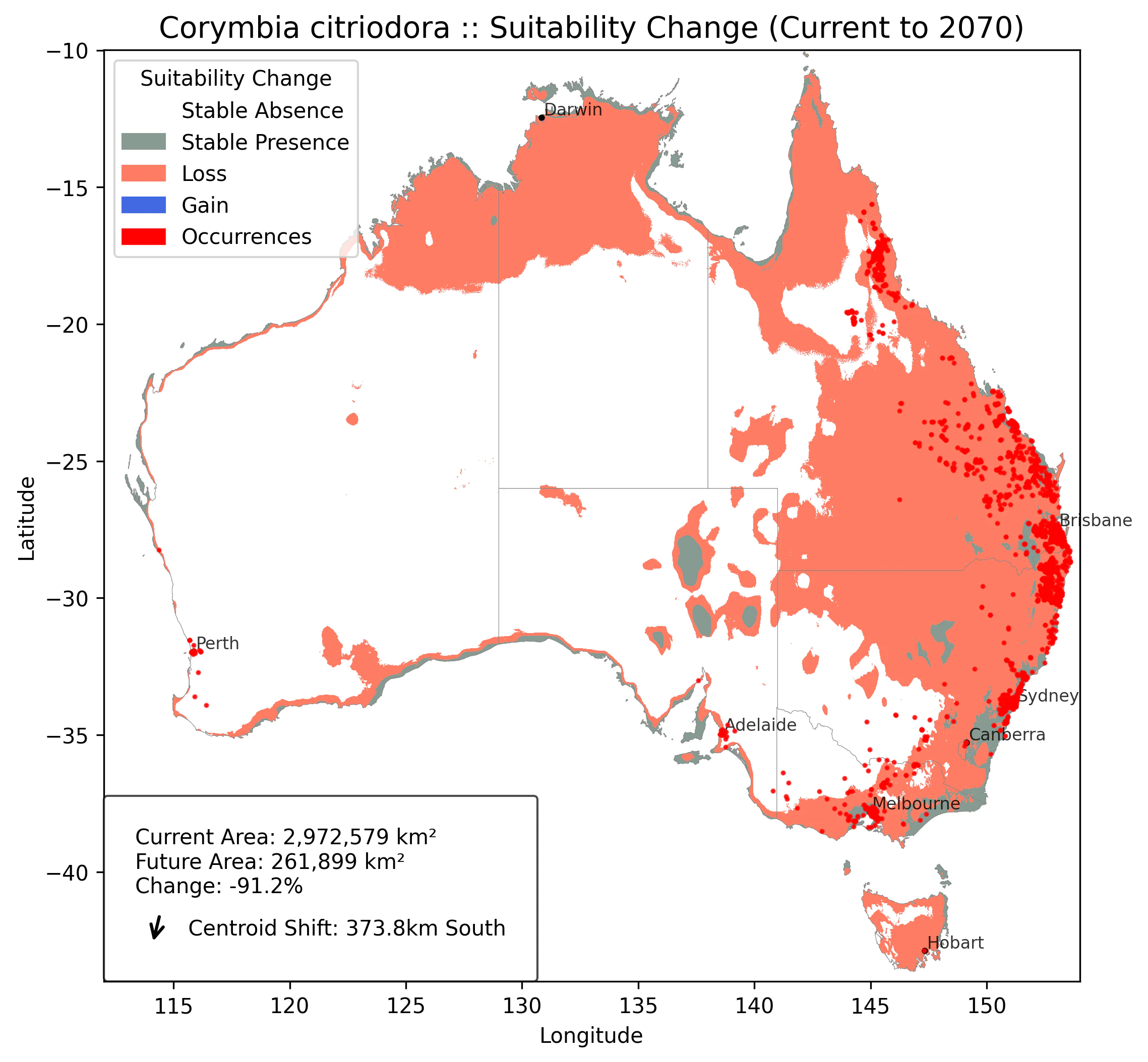
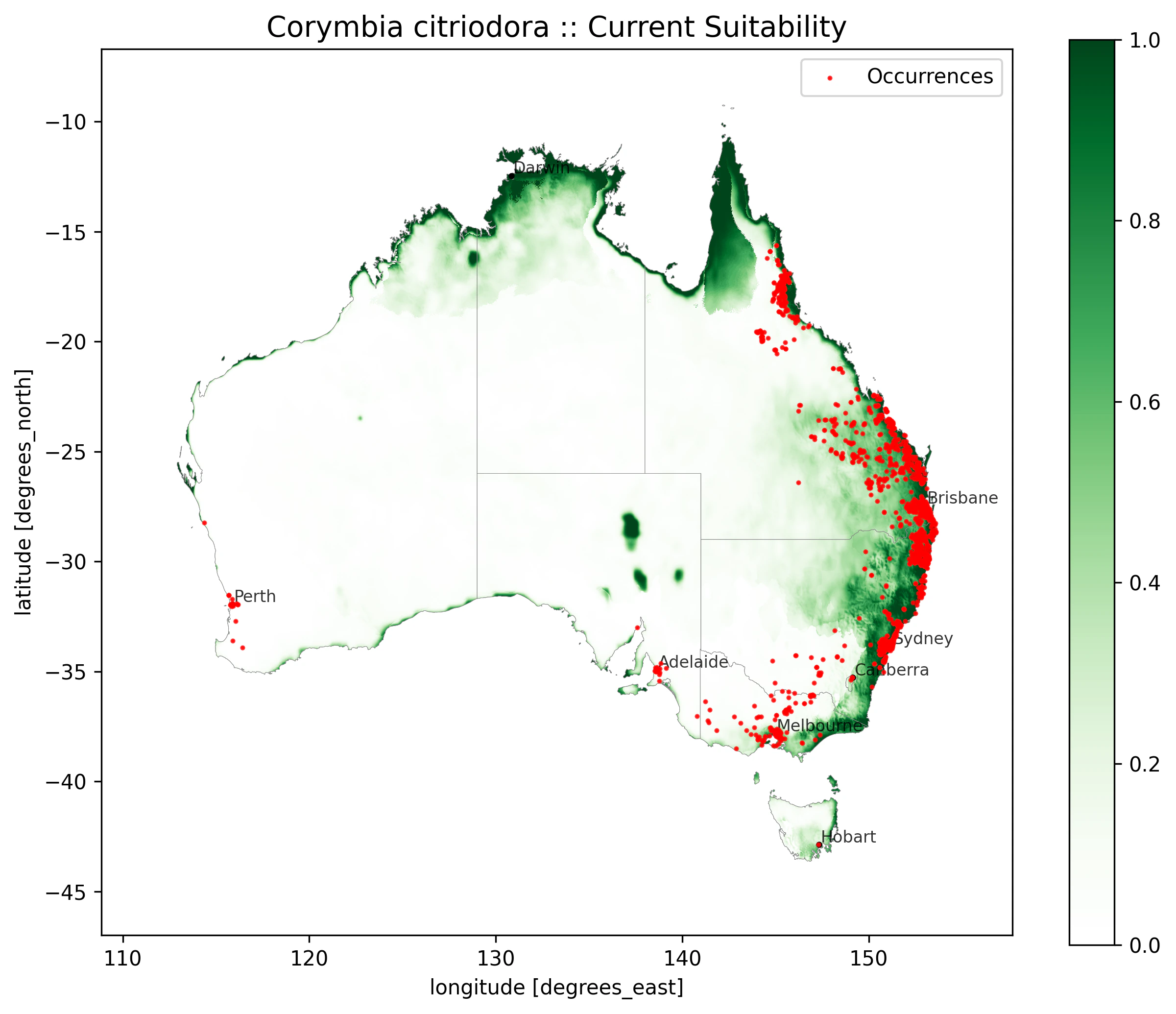
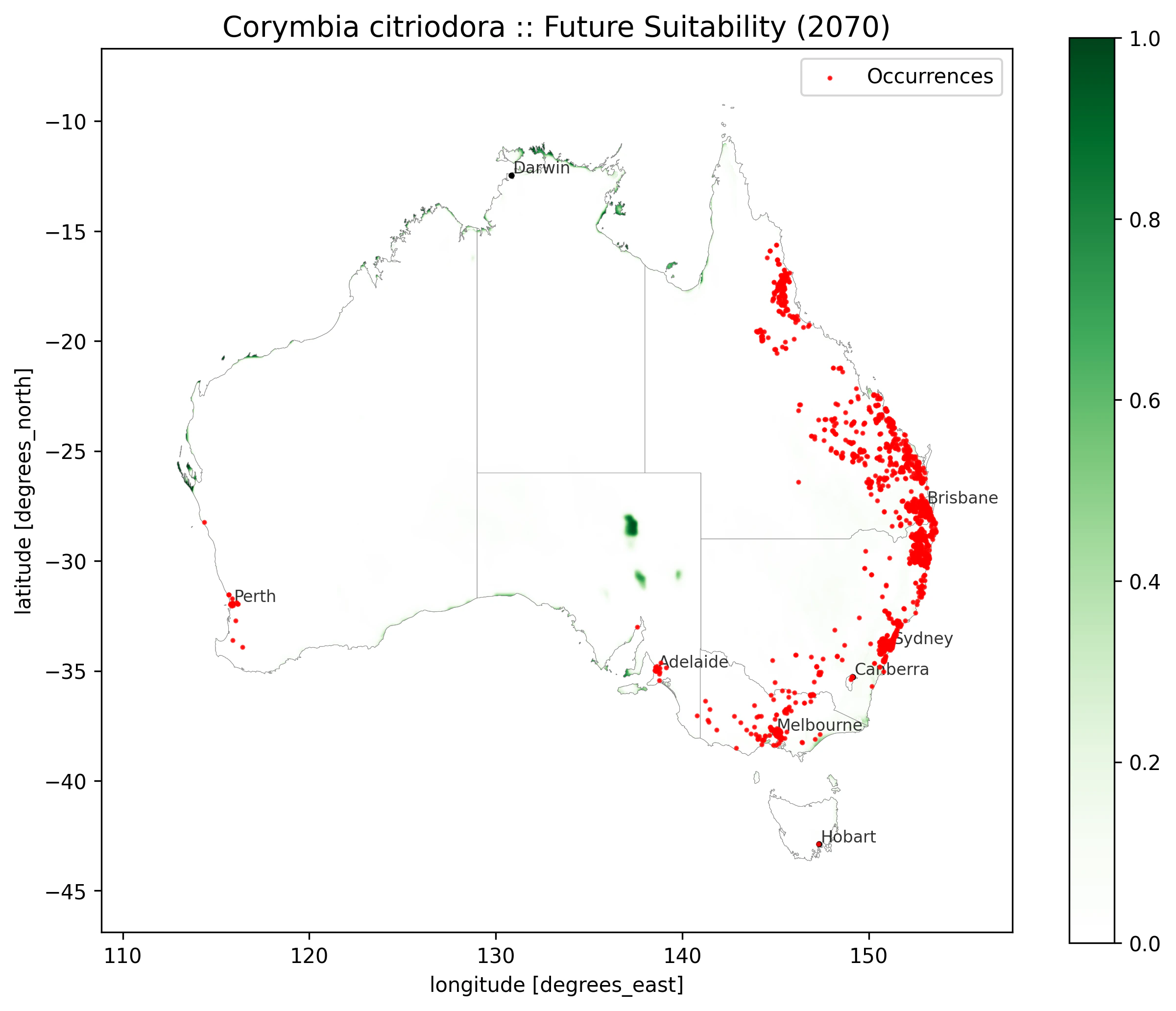
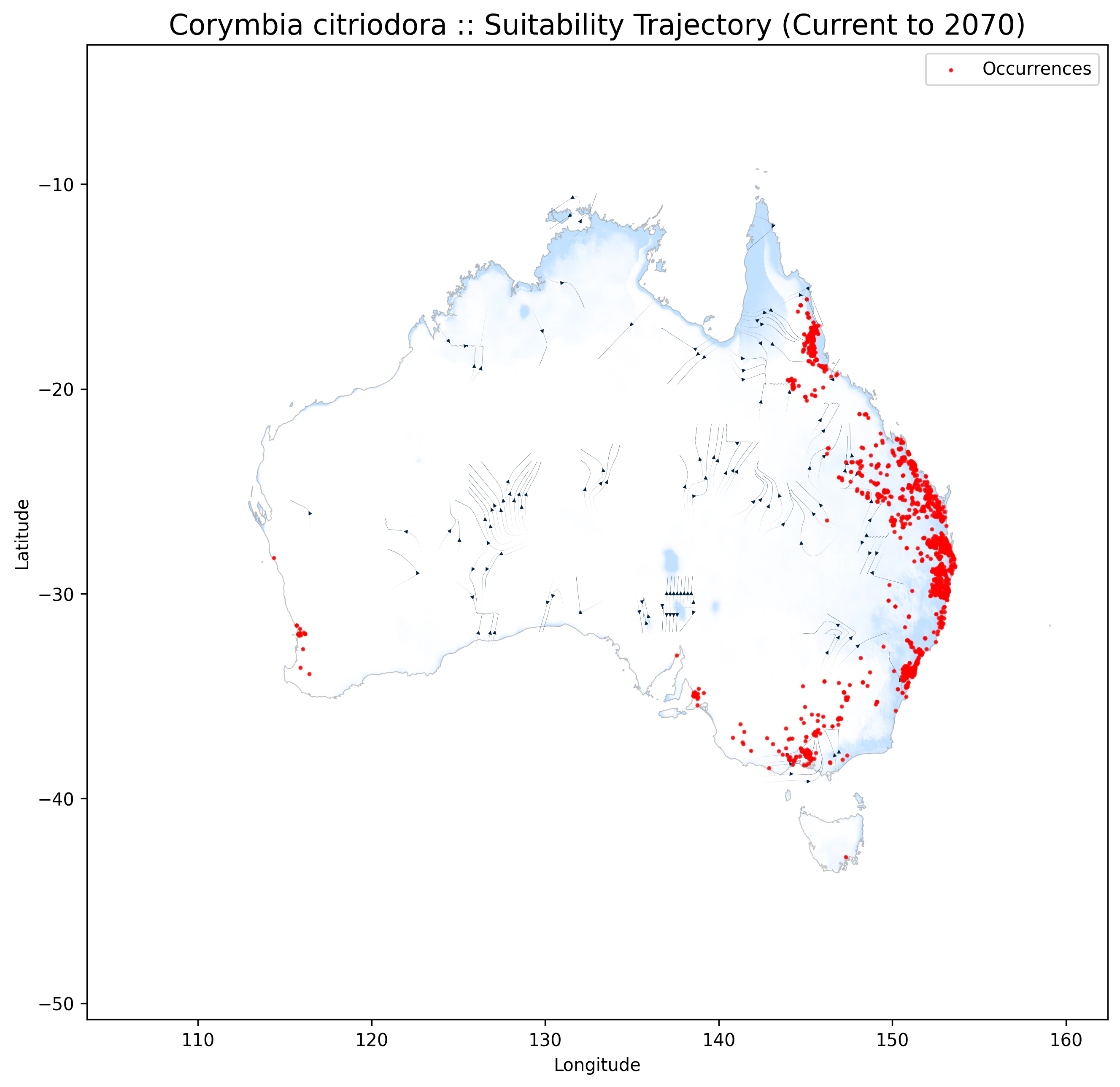
change_plot- Suitability change mapcurrent_gradient- Current climate suitabilityfuture_gradient- Future climate suitabilitytrajectory_streamplot- Habitat shift trajectories
string
Error message if job failed
Example response (completed)
Download results
Available file types
change_plot- Shows habitat gain, loss, and stability between current and future climatescurrent_gradient- Current climate suitability map with gradient coloringfuture_gradient- Future climate suitability map for the specified periodtrajectory_streamplot- Streamlines showing how suitable habitat areas shift over time
Example outputs
Suitability change map
Current climate gradient
Future climate gradient
Trajectory streamplot
Example
Implementation details
Technical architecture
Technical architecture
The SDM service uses:
- MaxEnt modeling for species distribution predictions
- CHELSA v2.1 climate data (1km resolution)
- GBIF species occurrence records
- Cloud compute infrastructure (16GB RAM per job)
- Persistent caching for climate data files
Rate limits
Rate limits
- Maximum 10 concurrent SDM jobs per API key
- Each job has a 1-hour timeout
- Results are cached for 7 days
Billing
Billing
SDM generation requests are billable events. Each successful job submission counts as one API call for billing purposes.